Ubiquitin (Ub) is a small, 76-residue, protein (8.5 kDa) found both as free monomer and covalently attached to itself and other proteins in eukaryotic cells. Free Ub is a very compact and stable molecule that is easily refolded after being denatured. It is therefore recommended that for detection of free Ub on Westerns, the Tris-Tricine SDS-PAGE is used and nitrocellulose filters are autoclaved after the transfer and before blocking and addition of anti-Ub antibodies. The C-terminus of ubiquitin forms an isopeptide bond with the e-amino group of a lysine side chain in a target protein. In this way proteins can be covalently modified by the addition of ubiquitin which may alter the target protein's function. Monoubiquitination generally targets proteins for internalization, endocytosis and lysosomal degradation, or modifies the surface charge of histones and affects chromatin compaction. Conjugation of ubiquitin (Ub) involves a three-step mechanism whereby specific enzymes (or enzyme complexes) activate and covalently link Ub to their substrates.
应用类型
ELISA,Immunohistochemistry,Western Blot,
免疫原
This purified antibody was prepared from rabbit serum after repeated immunizations with ubiquitin coupled to rabbit IgG using glutaraldehyde.
来源宿主
Rabbit
反应性
A Broad Range Of Species
保存建议
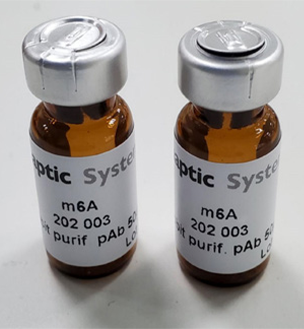
Store vial at -20° C or below prior to opening. This vial contains a relatively low volume of reagent (25 µL). To minimize loss of volume dilute 1:10 by adding 225 µL of the buffer stated above directly to the vial. Recap, mix thoroughly and briefly centrifuge to collect the volume at the bottom of the vial. Use this intermediate dilution when calculating final dilutions as recommended below. Store the vial at -20°C or below after dilution. Avoid cycles of freezing and thawing.