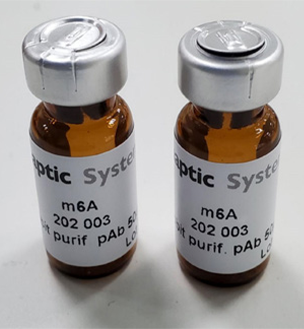
Anti-Tet3 is expressed in colon, muscle, adrenal gland and peripheral blood lymphocytes. Anti-Tet3 is involved in the epigenetic chromatin reprogramming of a zygote after its fertilization, and the demethylation occurs before the first cell division in the paternal pronucleus. Tet 3 antibody cannot bind to the maternal pronucleus chromatin due to DPPA3/PGC7 chromatin presence. Tet 3 functions as the dioxygenase which synthesizes a hydroxyl group to 5-methylcystosine (5mC) to form 5-hydroxymethylcystosine. Tet3 mediates the formation of 5-formylcystosine from 5hmC and subsequently 5fC to 5-carboxylcystosine, and consequently Tet3 plays an active role in catalyzing those conversions which have been suggested as the first step for cytosine DNA de-methylation. Tet 3 also recruits O-GlcNAc transferase OGT to aid H2B GlcNAcylation by OGT. Anti-TET3 antibodies are ideal for researchers interested in Epigenetics, Cancer, Chromatin Research and Histone research.
应用类型
ELISA,Western Blot,
免疫原
TET3 antibody was prepared from whole rabbit serum produced by repeated immunizations with a human TET-3 domain containing the N-terminal 160 amino acids of the protein.
来源宿主
Rabbit
反应性
H. sapiens (Human)
保存建议
Store vial at -20° C or below prior to opening. This vial contains a relatively low volume of reagent (25 µL). To minimize loss of volume dilute 1:10 by adding 225 µL of the buffer stated above directly to the vial. Recap, mix thoroughly and briefly centrifuge to collect the volume at the bottom of the vial. Use this intermediate dilution when calculating final dilutions as recommended below. Store the vial at -20°C or below after dilution. Avoid cycles of freezing and thawing.