The three dimensional structure of many extracellular proteins is stabilized by the formation of disulphide bonds. Studies suggest that a microsomal enzyme known as Protein Disulphide Isomerase (PDI) is involved in disulphide-bond formation via its oxidase activity and isomerization via its isomerase activity, as well as the reduction of disulphide bonds in proteins. Studies suggest BiP and PDI work together sequentially to increase oxidation of these proteins. PDI has also been found to function as a chaperone to prevent the aggregation of unfolded substrates, and serves as a subunit of prolyl 4-hydroxylase and microsomal triglyceride transferase. PDI is an abundant 55kDa protein located primarily in the ER, however studies have also proved its presence in the cytosol. PDI has the ability to reside in the ER permanently due to the highly conserved KDEL sequence at its carboxy-terminus. It uses carboxy-terminal KDEL as a retention signal, and this appears to be sufficient to reduce the secretion of proteins from the ER. This retention is reported to be mediated by a KDEL receptor.
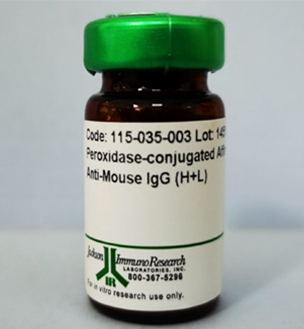
Store vial at -20° C prior to opening. Aliquot contents and freeze at -20° C or below for extended storage. Avoid cycles of freezing and thawing. Centrifuge product if not completely clear after standing at room temperature. This product is stable for several weeks at 4° C as an undiluted liquid. Dilute only prior to immediate use.